Posts

Showing posts with the label Anthony Amoroso

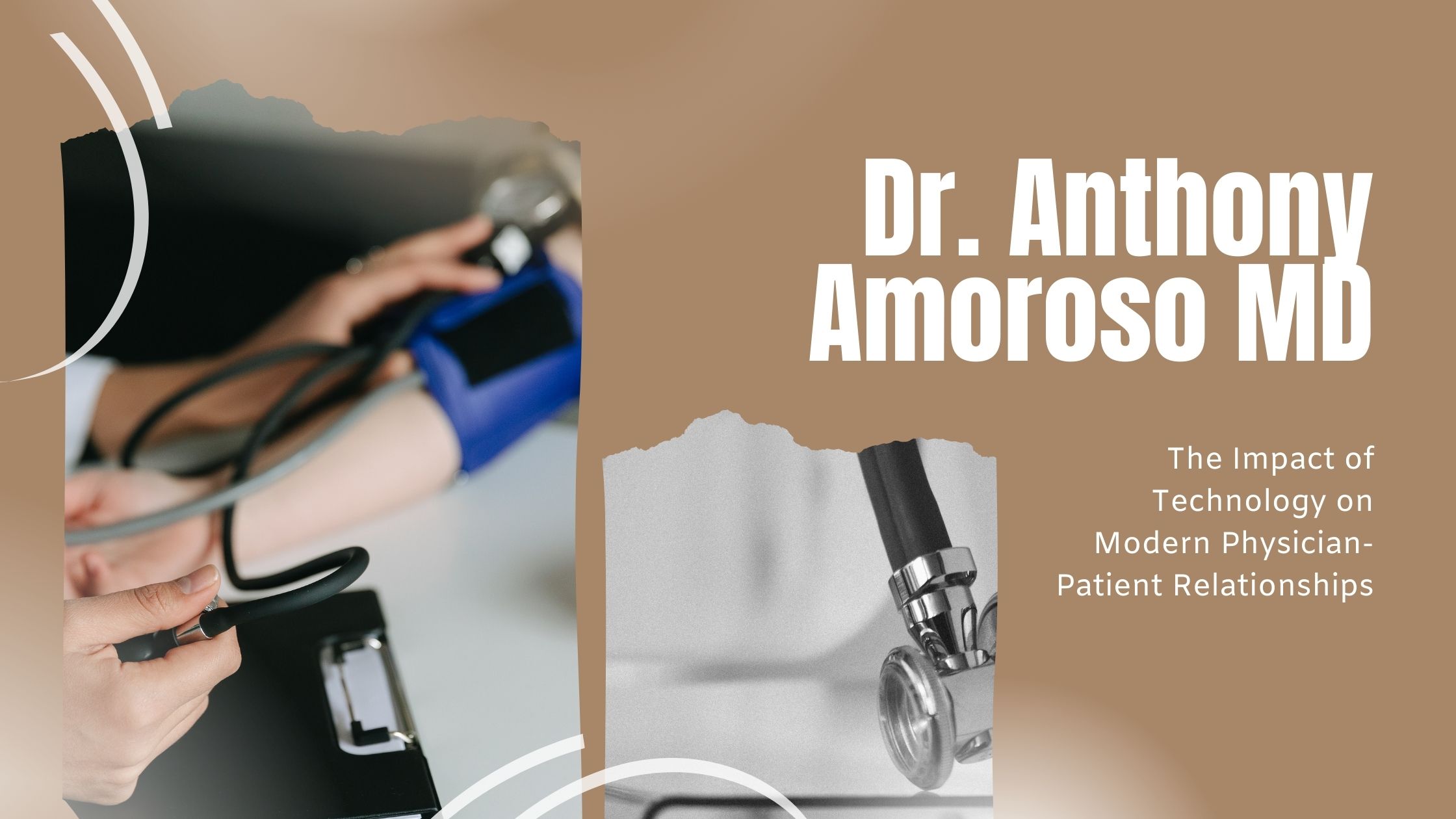
Dr. Anthony Amoroso MD | The Impact of Technology on Modern Physician-Patient Relationships
Image
 The impact of technology on modern physician-patient relationships is multifaceted, bringing both advantages and challenges. Here are some key aspects to consider: Advantages: Access to Information: Patient Empowerment: Technology provides patients with easy access to medical information, enabling them to be more informed about their health conditions and treatment options. Health Apps and Wearables: Patients can use mobile apps and wearable devices to monitor their health, track symptoms, and adhere to treatment plans. Communication and Telemedicine: Remote Consultations: Telemedicine allows patients to consult with physicians remotely, improving access to healthcare, especially for those in rural or underserved areas. Convenience: Virtual communication tools, like emails and messaging apps, enable convenient communication between patients and healthcare providers. Electronic Health Records (EHRs): Efficiency: EHRs streamline the management of patient records, reducing paperwork ...

Dr. Anthony Amoroso MD | The Ultimate Guide to Choosing the Right Physician for Your Family

Image
 Choosing the right physician for your family is a crucial decision that can significantly impact your family’s health and well-being. Here’s a comprehensive guide to help you navigate this process: 1. Define Your Needs: =>Identify the specific healthcare needs of your family. =>Consider factors like age, existing medical conditions, and any specialized care requirements. 2. Insurance Coverage: =>Check your health insurance plan to understand which physicians are in-network. =>Out-of-network care can be significantly more expensive. 3. Credentials and Qualifications: =>Ensure the physician is board-certified in their respective specialty. Verify their education, training, and any disciplinary actions. 4. Referrals and Recommendations: =>Seek recommendations from friends, family, and colleagues. =>Consult with other healthcare professionals for referrals. 5. Location and Accessibility: =>Choose a physician with a convenient location. =>Consider proximity t...

Top 3 Challenges Faced by Physician Assistants

Image
 Physician Assistants (PAs) play a crucial role in healthcare, but they do face some challenges. Here are three of them: Scope of Practice and Autonomy: PAs often work under the supervision of physicians, and the extent of their autonomy varies by state and healthcare setting. The challenge lies in finding the right balance between collaboration with physicians and having the freedom to make independent decisions within their scope of practice. Recognition and Understanding of the PA Role: Despite their valuable contributions, some people, including patients and other healthcare professionals, may not fully understand the role of PAs. This lack of recognition can lead to underutilization of their skills and expertise. It’s a challenge to advocate for the importance of PAs in the healthcare system and ensure that they are utilized to their full potential. Work-Life Balance and Burnout: Like many healthcare professionals, PAs often face demanding work schedules and high levels of ...

Exploring the Benefits of Working with a Physician

Image
 Collaborating with a physician in a professional setting offers numerous benefits: Medical Expertise: Physicians undergo extensive education and training, making them experts in diagnosing and treating various medical conditions. Working with a physician provides access to this wealth of medical knowledge and experience. Collaborative Care: In healthcare settings, collaboration among different healthcare professionals, including physicians, is essential for providing comprehensive care. Each member of the team brings a unique skill set, contributing to a more holistic approach to patient well-being. Guidance and Mentorship: For individuals starting their careers in healthcare, working with a physician provides valuable guidance and mentorship. Physicians can share their experiences, offer insights, and help shape the professional development of their colleagues. Patient Care Coordination: Physicians often serve as central figures in coordinating patient care. They work with nu...

Anthony Amoroso MD - Exploring the World of Physician Care

Image
Exploring the world of physician care can be a fascinating journey, as healthcare is a vital part of our lives. Physicians play a crucial role in diagnosing, treating, and preventing various medical conditions. Here's a broad overview of the world of physician care: Types of Physicians: There are various types of physicians, each specializing in different areas of medicine. Some common specialties include family medicine, internal medicine, pediatrics, surgery, obstetrics and gynecology, and psychiatry. Specialists further focus on specific areas, such as cardiology, dermatology, or orthopedics.   Education and Training: Becoming a physician typically involves years of education and training. After completing a bachelor's degree, aspiring doctors attend medical school, which lasts four years. They then complete a residency program in their chosen specialty, which can last anywhere from three to seven years. Some may opt for fellowships to gain further specialization.   Primary...

Anthony Amoroso MD - Who Can Benefit from Seeing a Physician?

Image
Seeing a physician is beneficial for a wide range of individuals, and it's an essential part of maintaining good health and managing medical conditions. Here are some categories of people who can benefit from seeing a physician: Individuals of All Ages: From newborns to the elderly, people of all ages can benefit from regular check-ups and medical care.   Preventive Care: Even if you're feeling healthy, regular check-ups can help identify potential health issues before they become serious. This includes vaccinations, cancer screenings, and health education.   Chronic Illness Management: Individuals with chronic conditions like diabetes, hypertension, asthma, or heart disease require ongoing monitoring and management to ensure their conditions are well-controlled.   Acute Illness or Injury: If you have a sudden illness or injury, a physician can diagnose the problem, provide treatment, and offer guidance on recovery.   Mental Health: Mental health is an important aspe...

Anthony Amoroso MD - Why Is Physician Care Important?

Image
Physician care is important for several reasons:   Expertise and Training: Physicians undergo extensive education and training to become experts in diagnosing and treating various medical conditions. Their knowledge and experience are crucial for accurate and effective healthcare. Preventative Care: Physicians can help individuals prevent health issues through regular check-ups, vaccinations, and health screenings. Preventative care can identify risk factors early, allowing for timely interventions.   Diagnosis and Treatment: When individuals experience health problems, physicians can diagnose the underlying causes and develop treatment plans. This is critical for managing acute and chronic illnesses.   Disease Management: For people with chronic conditions, ongoing care from a physician is vital. They can monitor the condition's progression, adjust treatment plans as needed, and help patients manage their symptoms and overall well-being.   Medication...

Anthony Amoroso MD - How to Find the Right Physician for You

Image
Finding the right physician for your healthcare needs is crucial for maintaining your well-being. Here are steps to help you find the right physician:   Determine Your Needs:   Consider the type of medical care you need, such as a primary care physician (PCP), specialist, or surgeon. Assess your health insurance to understand which providers are in-network to save on costs.   Ask for Recommendations:   Seek recommendations from friends, family, and colleagues who have similar healthcare needs. Consult your current healthcare providers for referrals.   Research Online:   Look up physicians in your area using search engines or healthcare directories. Read online reviews, but take them with a grain of salt, as experiences can vary widely.   Check Qualifications:   Verify the physician's credentials and board certifications. Confirm that they are licensed and have no disciplinary actions against them.   ...

Anthony Amoroso MD - What Is the Job Description of a Physician Assistant

Image
 If you have made the decision to have a career as a physician assistant then all I can say is that you made a great choice, and hopefully you already know what it’s going to be like to be a PA in the health care industry. What a PA does Is they will be practicing medicine while they are under the supervision of a physician or a surgeon. Although many people tend to confuse this job with that of a medical assistant, whats important to remember is that a medical assistant mainly does routine clinical and clerical tasks. PAs are able to diagnose health care illnesses and diseases, they are able to provide patients with therapeutic and preventative health care services while they are assigned these tasks by a physician. They can do a wide range of services that involve making diagnoses, give patients treatment plans, they order laboratory tests, and they are also able to interpret the results for these tests that will help them make a diagnosis. PAs will be treating minor injuries, th...

Anthony Amoroso MD - The Path to Becoming a Physician Assistant

Image
 Working within the healthcare field can be personally and financially rewarding. For those who do not wish to attend medical school, becoming a physician assistant is an attractive alternative. As a PA, you will practice medicine under the supervision of a doctor. PAs perform diagnostic, preventative healthcare, and therapeutic services delegated by their monitoring physicians. Becoming a physician assistant requires formal educational training, clinical work, and passing a national exam in order to receive a license. Physician assistant programs require at least two years of full-time attendance, so this is not a career to be entered into on a whim. Those who desire less formal training and limited responsibilities within the doctor’s office may want to instead explore becoming a medical assistant. The first step to becoming a PA is applying to several physician assistant programs and being accepted to at least one. The program should be accredited to provide PA training and it s...

Anthony Amoroso MD - What Are the Fields That Physician Assistants Can Work In?

Image
You might be wondering, what a physician assistant (PA) can do other than in the hospital settings. In fact, job opportunities are everywhere for PA's, especially in rural places or inner-city clinics that are facing shortage of physicians. The employment rate of PA's is predicted to grow rapidly as a result of high demand of healthcare services. Most PA's serve in primary care settings - general internal medicine, family medicine and pediatrics, while some others commit themselves in specialty areas such as emergency medicine, general and thoracic surgery, geriatrics and orthopedics.   There are some specific fields for PA's as well.   Bureau of Prisons Physician Assistant   The PA's who work in the prisons will be responsible for the prisoners' health care and diagnosis. PA's will help to observe and evaluate the health condition of the prisoners, as well as to perform physical examinations, and run lab tests for them. This job will need the applicants to ...

Anthony Amoroso MD - What Are the Key Pre-Requisites to Becoming a Physician Assistant?

Image
The physician assistant profession was introduced in the year 1965, it was the first PA (Physician assistant program) offered by Duke University. The amazing increase in demand for this profession had brought with it with more than 135 training modules in this medical field today. One can easily find increasing numbers of Universities and Schools offering accredited physician assistant degree and bachelor programs which are held in the Universities campus or through online program, as compared to some twenty years ago.   But what are the prerequisites for anyone to become a physician assistant:- 1. Most of the PA program requires its applicants to have at least two years of college education with some relevant working experience in the health care industry. However, more stringent world famous PA degree or bachelor program from renowned Universities would require their candidates to have at least a bachelor degree in any fields with at least 3 to 4 years of working experience...

Anthony Amoroso MD - The Path To Becoming A Physician Assistant

Image
Working within the healthcare field can be personally and financially rewarding. For those who do not wish to attend medical school, becoming a physician assistant is an attractive alternative. As a PA, you will practice medicine under the supervision of a doctor. PAs perform diagnostic, preventative healthcare, and therapeutic services delegated by their monitoring physicians.   Becoming a physician assistant requires formal educational training, clinical work, and passing a national exam in order to receive a license. Physician assistant programs require at least two years of full-time attendance, so this is not a career to be entered into on a whim. Those who desire less formal training and limited responsibilities within the doctor's office may want to instead explore becoming a medical assistant.   The first step to becoming a PA is applying to several physician assistant programs and being accepted to at least one. The program should be accredited to provide PA t...

Anthony Amoroso MD - How You Can Become A Physician Assistant

Image
Becoming a physician assistant is demanding, but it can be one of the most rewarding medical careers. Perhaps the first step in becoming a physician assistant should be asking yourself why you want to be one. After all, there are many other types of medical professionals, including nurses, nurse practitioners, and medical assistants, and many physician assistants come from careers in these fields. Being a physician assistant is a more autonomous profession, where your work complements that of the collaborative physician supervisor. Ask yourself, "Why do I want to become a PA, and not a nurse practitioner, physician, or other medical professional?"   If you want to become a PA, you will have to meet certain requirements in order to be admitted to one of the accredited physician assistant programs. Most physician assistant schools and all the top ones require that you have some degree of experience in direct patient care. That may include experience as a hospital orderly, a...

Anthony Amoroso MD - What Are The Physician Assistant Requirements

Image
 Becoming a physician assistant is a wise decision because the field is expected to grow and the individual, referred to as a PA, can expect an attractive salary. PA requirements include education, clinical practice, licensure, continuing education, and recertification. The PA is a higher-level occupation than the medical assistant, so the requirements are more numerous. In terms of education, physician assistant requirements entail completion of one of the accredited U.S. physician assistant programs. This educational program includes traditional classroom instruction as well as related work within a laboratory. The courses focus on sciences like human anatomy, physiology, and biochemistry in addition to subjects such as physical diagnosis and clinical medicine. The student is also required to engage in rotating clinical practice within areas like family medicine, surgery, internal medicine, and pediatrics.   There is also a licensing component to the PA requirements. When th...

Anthony Amoroso MD - Physician Assistant Programs-Facts and Figures

Image
 Is attending medical school not an option for you but you still wish to work in a medical setting? Would you prefer to work with the general public and not with military officials?   Your lifelong dream to be a part of the booming healthcare world has not been shattered yet. There is still time. In fact, this might prove to be the best possible option for someone working in the medical sector (who is not a doctor) to serve the community, and earn a good amount of money too.   Who is a Physician Assistant?   A physician assistant is a highly qualified healthcare professional who is granted permission to practice medicine, under the guidance of a licensed physician. These professionals conduct physical exams, counsel patients, assist in surgeries, and write prescriptions among others.   Schools offering Physician Assistant Programs.   It is only after 2005 that physician assistants began to be employed outside Canadian Military. This deci...

Anthony Amoroso MD - Why Finding The Right Physician Leads Can Be So Profitable

Image
 Practicing Physician Leads from Third Party Providers   If you conduct business in an industry where doctors and other practicing physicians are your primary prospect, physician leads may the perfect marketing tool for you. While there are databases available for business owners to browse with a list of every physician in the nation, many marketing departments are finding these profiles to be inaccurate or out of date. By purchasing quality physician leads from a lead generation company, you can rest assured that you are placing your efforts in quality practicing prospects that will make your marketing campaign a success. With a number of different lead generation companies on the market, there are important features to look for to ensure you are investing in the right provider offering the best possible leads. A quality physician lead provider will have a wide database of health care practitioners broken down into specific categories for the easiest possible targeting. B...

Anthony Amoroso MD - Facts You Should Know About a Physician Assistant

Image
Let's look at some interesting facts about Physician Assistant:   1. The modern physician assistant (PA) profession officially began on October 6th 1967 which was founded by Dr. Eugene Stead, where the first PA class of four students graduated from the Duke University PA Program. 2. A PA does most of the day-to-day job of a doctor from conducting exams, diagnosing conditions, prescribing medications, to assisting in surgery.   3. Physician assistants and nurses have similarities but they have different underlying philosophies in training and practice.   4. PA only needs to undergo training for 2-3 years after obtaining a degree.   5. PA is a good choice to study since health care development is being strongly supported and using a PA instead of a physician saves money, resulting in an increase in the demand of PA.   6. In order to use the credentials "Physician Assistant-Certified (PA-C), a PA will have to obtain license as per the licensure ...

Anthony Amoroso MD - The Characteristics of Effective Physician Assistants - Kindness

Image
Physician assistants are professionally trained individuals that are licensed to provide health care services under the supervision of a trained and experience professional physician. The health care sector is of course a service industry, and this means how physician assistants interact and deal with their patients is vital to their success and effective provision of their services. People are known to be difficult and stubborn when they are sick, and it is easy for a physician to be impatient and easily lose their cool, but it is vital that they keep a level of emotion within themselves that will mould them into great and respectable professionals. The best quality to develop then is kindness, which is involves being warmhearted, humane, considerate, sympathetic and forgiving. This kindness should be directed towards patients, fellow physician assistants and their supervisors. There are several benefits that come with being kind:   Patient confidence   A kind professional gi...

Anthony Amoroso MD - Things to Consider When Choosing a Primary Care Physician

Image
 Taking charge of your healthcare is imperative no matter how old you are. One of the most important decisions you can make is choosing a great Primary care physician. The primary care physician is on the front lines of your healthcare and can be the difference between receiving early intervention, delayed diagnosis or misdiagnosis. Therefore, there are several questions you should consider before choosing your doctor. What insurances is your doctor in network with?   • In today's world, insurance is the driving force for healthcare. Physicians complain they do not receive enough reimbursement for their services and patients complain that nothing is covered.   Choosing the physician that accepts your insurance can be the difference in a $50 copay or $10 copay.   What is your doctor's availability during an emergency? If he cannot attend to you immediately, who will cover for him?   • It is important to consider the physician's office hours as well as how well he...